How to Clean Mintonka Suede Slippers Without Ruining Them
Clean Mintonka suede slippers by brushing off dirt, then rubbing scuffs with a suede eraser and treating stains with a little white vinegar or cornstarch. Never machine wash them, never soak them in water, and never dry them with direct heat. Let them air dry fully, brush the nap back up, and finish with protector spray.
Suede looks soft and forgiving, but it punishes the wrong cleaning method fast. One trip through the washing machine can stiffen the leather, shrink the fit, and leave water marks that never fade. Ordinary soap and a wet cloth can flatten the nap and spread a small stain into a large patch.
The good news is that suede is not as fragile as its reputation suggests. Most dirt and scuffs come off with dry brushing and a rubber eraser, and most stains respond to gentle, targeted treatment. This guide walks you through the routine step by step, from everyday dust to salt marks, oil spots, and smells. Start at the Mintonks homepage to explore premium Mintonka slippers.
What Is Suede, and Why Does It Need Special Care?
Suede is leather made from the underside of an animal skin, with a soft, fuzzy, napped finish. Unlike smooth leather, it has no tough outer surface to repel water and dirt. Its open pores absorb liquids quickly, which is why a spilled coffee or a splash from a puddle can leave a mark in seconds, yet that open texture is what makes suede feel so soft.
Because suede absorbs moisture so easily, excess water is its main enemy. Wikipedia’s entry on suede explains that suede should not be cleaned with soap and water or machine washed, and that suede brushes and suede rubbers are the right tools, often used with white vinegar or cornstarch. A protector spray applied after cleaning helps preserve the material. That is the foundation of this guide: keep it dry, brush it, erase it, and protect it.
Suede also shows wear differently from smooth leather. The nap can flatten where it is rubbed often and darken where oils settle in. Brushing restores the nap, an eraser lifts surface marks, and targeted treatment handles the rest. Act while the dirt is dry and the stain is fresh, not after it has been ground in over weeks.
What Do You Need to Clean Suede Slippers?
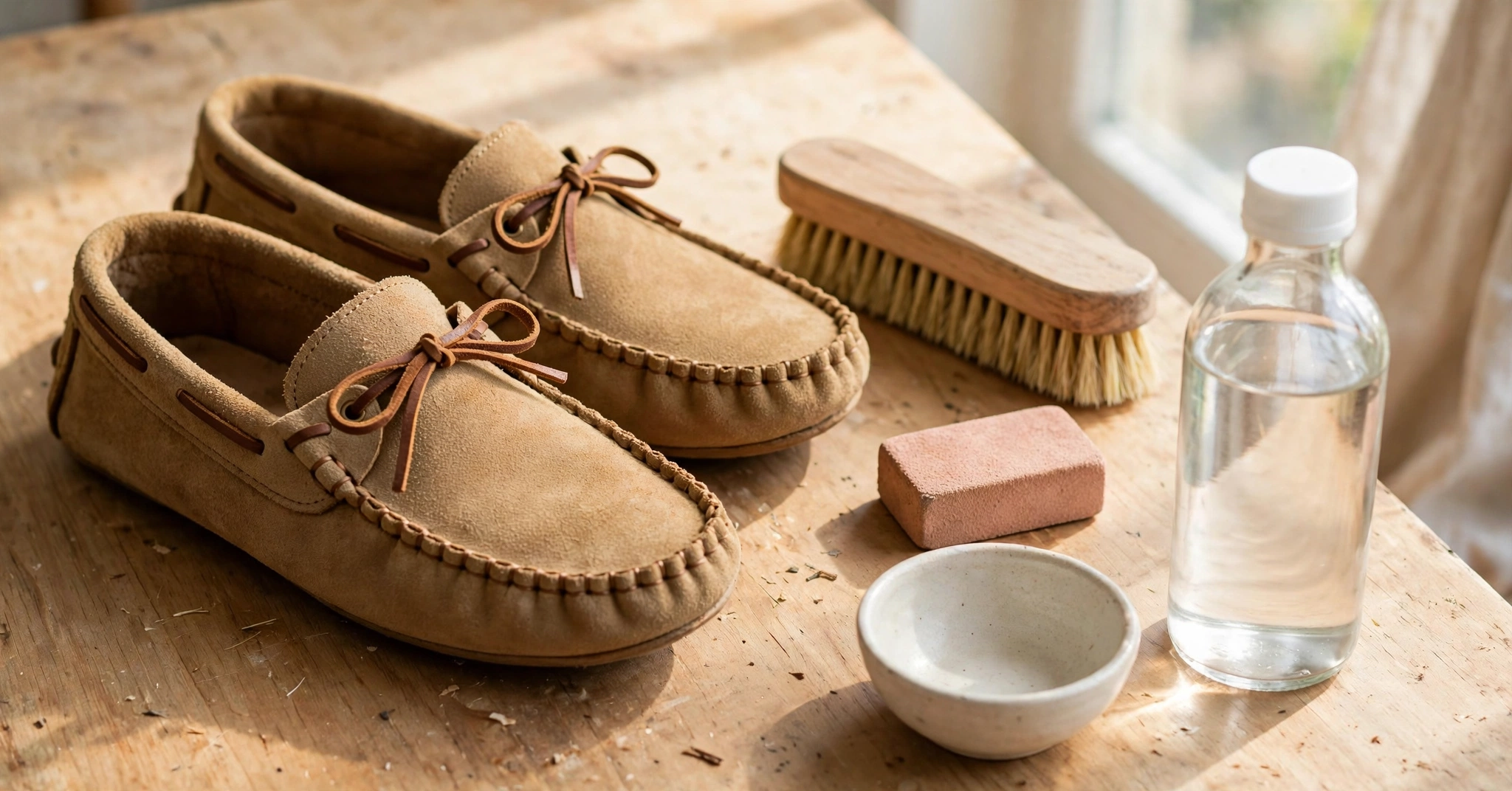
You need only a few inexpensive tools, and most of them are probably already in your home. A suede brush is the first essential. It has stiff, short bristles that lift dirt out of the nap without damaging it. A clean toothbrush works for small areas. Avoid wire brushes, which can tear the nap.
A suede eraser, sometimes called a suede block or suede rubber, is the second essential. It looks like a large pencil eraser and rubs scuffs away. A clean pencil eraser works in a pinch, and a fine nail file can help with stubborn marks. Keep a dedicated eraser for your slippers, because a dirty one can transfer grime back onto the suede.
For stains, keep white vinegar, cornstarch, and baking soda on hand. Vinegar lifts water marks and light stains, cornstarch absorbs oil and grease, and baking soda freshens the lining. You will also want a suede protector spray, clean white cloths, and newspaper for stuffing the slippers while they dry.
How Do You Clean Everyday Dirt and Dust?
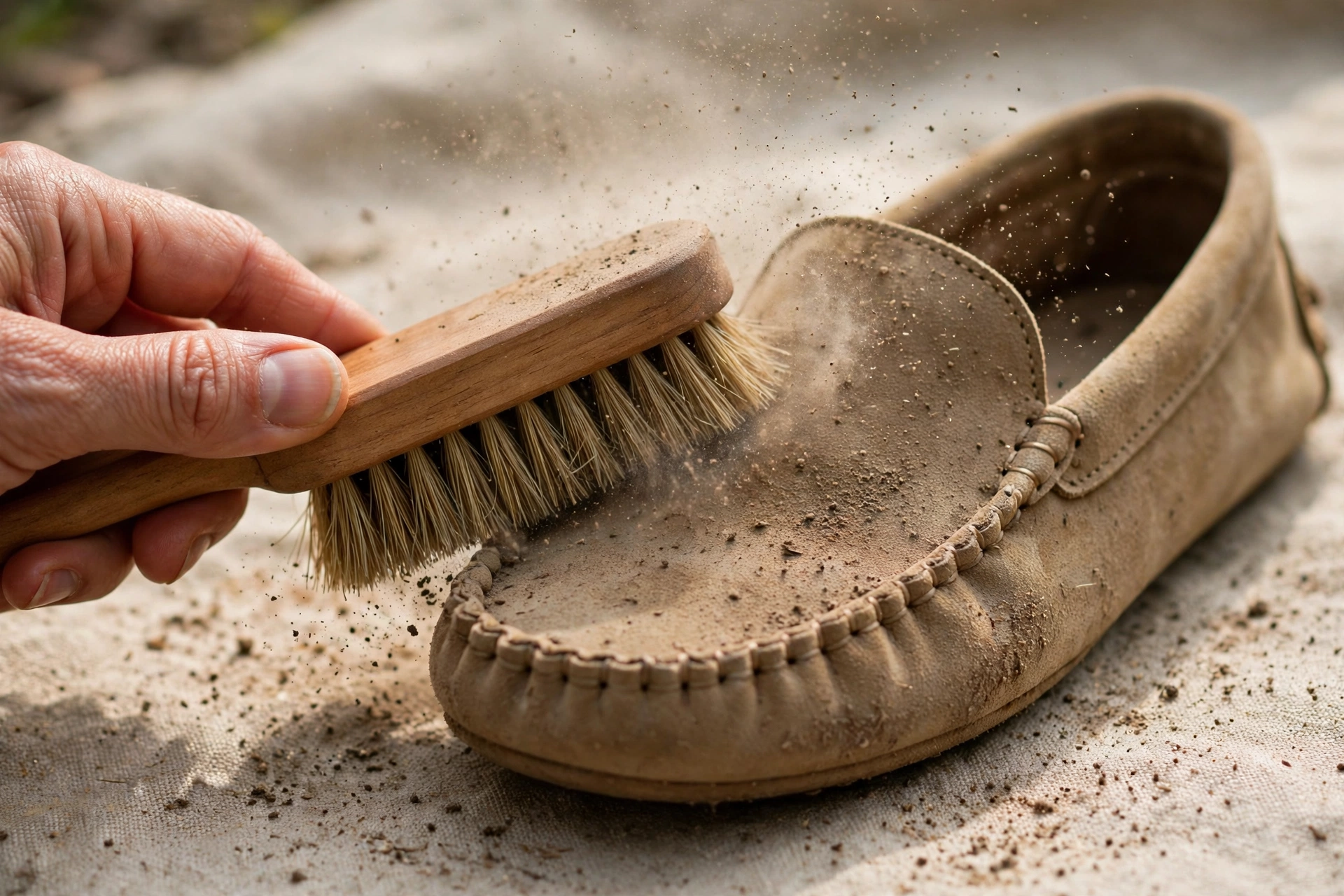
Always start with dry cleaning, and always let muddy slippers dry completely before you touch them. Brushing wet mud grinds it deeper into the nap and turns a small spot into a stain. Once the slippers are fully dry, brush the whole surface against the grain first, then with the grain. Brushing against the grain lifts trapped dirt, and brushing with the grain smooths the nap back.
Work in short, light strokes and let the brush do the job. Pressing hard can scuff the suede and flatten the nap. Pay attention to the toe, the heel, and the edges of the sole, where dirt collects most. Tap the brush clean often so you are not moving dirt from one spot to another.
Finish by brushing the whole slipper once more with the grain so the color looks even. Most everyday dirt comes off at this stage, with no need for liquids at all. Dry brushing once a week keeps the nap healthy and stops dirt building up into harder stains.
How Do You Remove Scuffs and Stains?
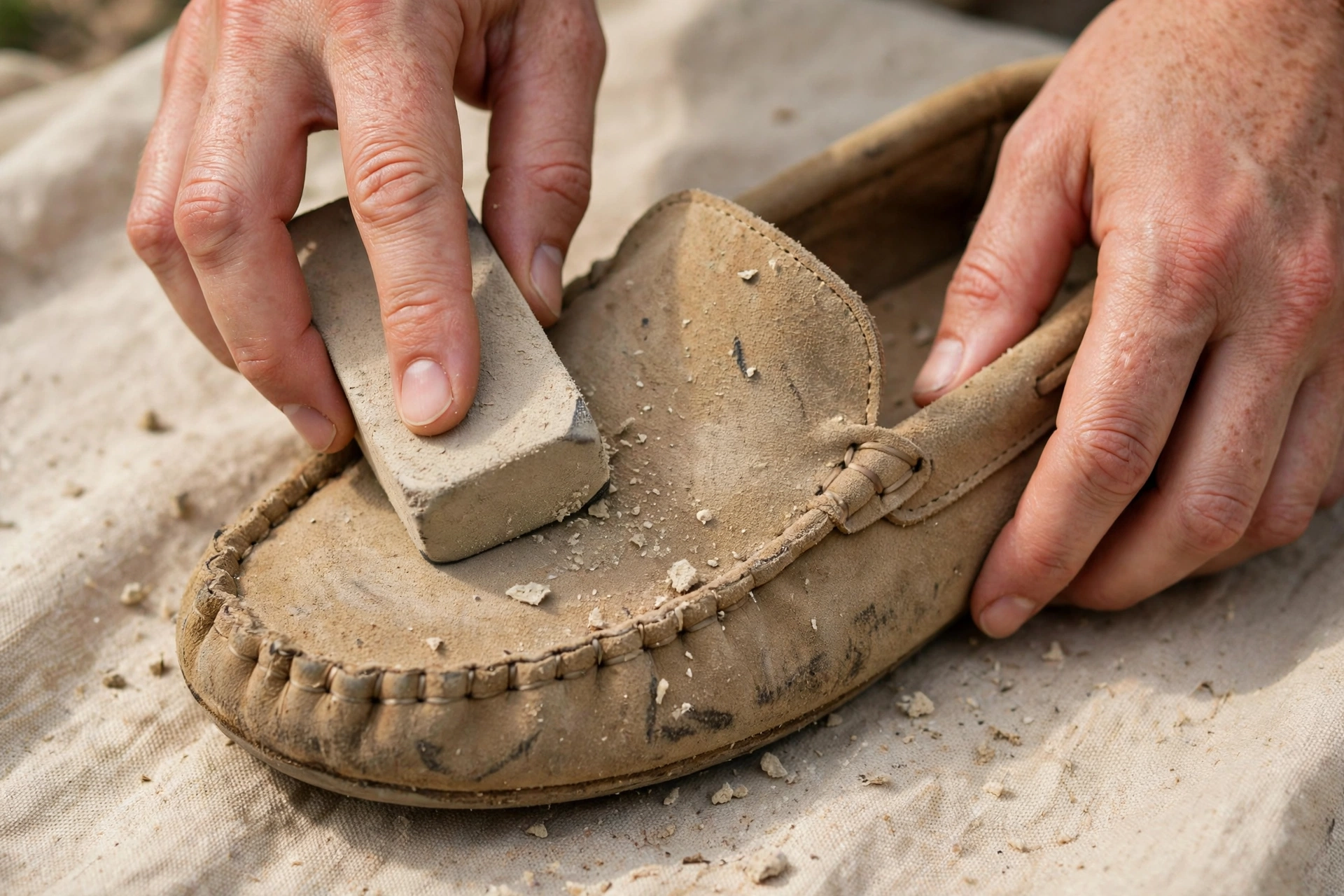
Rub scuffs first with the suede eraser, using gentle, short strokes. The eraser crumbles as it works, so brush off the crumbs and check your progress often. Most scuffs fade after a minute of patient rubbing.
For water marks and light stains, dampen a clean white cloth with a little white vinegar and blot, never rub, the mark. Rubbing spreads the stain and damages the nap. Let the area dry fully, then brush it to restore the texture. Repeat once if needed. Vinegar smells strong when wet, but the smell fades as the suede dries.
For oil and grease, cover the spot with cornstarch and leave it overnight. The powder absorbs the oil from the fibers. Brush it off the next day. Do not use water on an oil stain first, because water can set the grease. For salt marks from winter sidewalks, brush off the dry salt, then blot with a cloth barely dampened with equal parts water and white vinegar, and let the slippers dry slowly away from heat.
Can You Machine Wash Mintonka Suede Slippers?
No. Do not machine wash Mintonka suede slippers, and do not put them in the dryer. Machine washing soaks the suede, and soaking can distort the shape, stiffen the leather, fade the color, and leave tidemarks as the water dries unevenly. Agitation can also damage the lining and stitching, and dryer heat can shrink and harden the leather permanently.
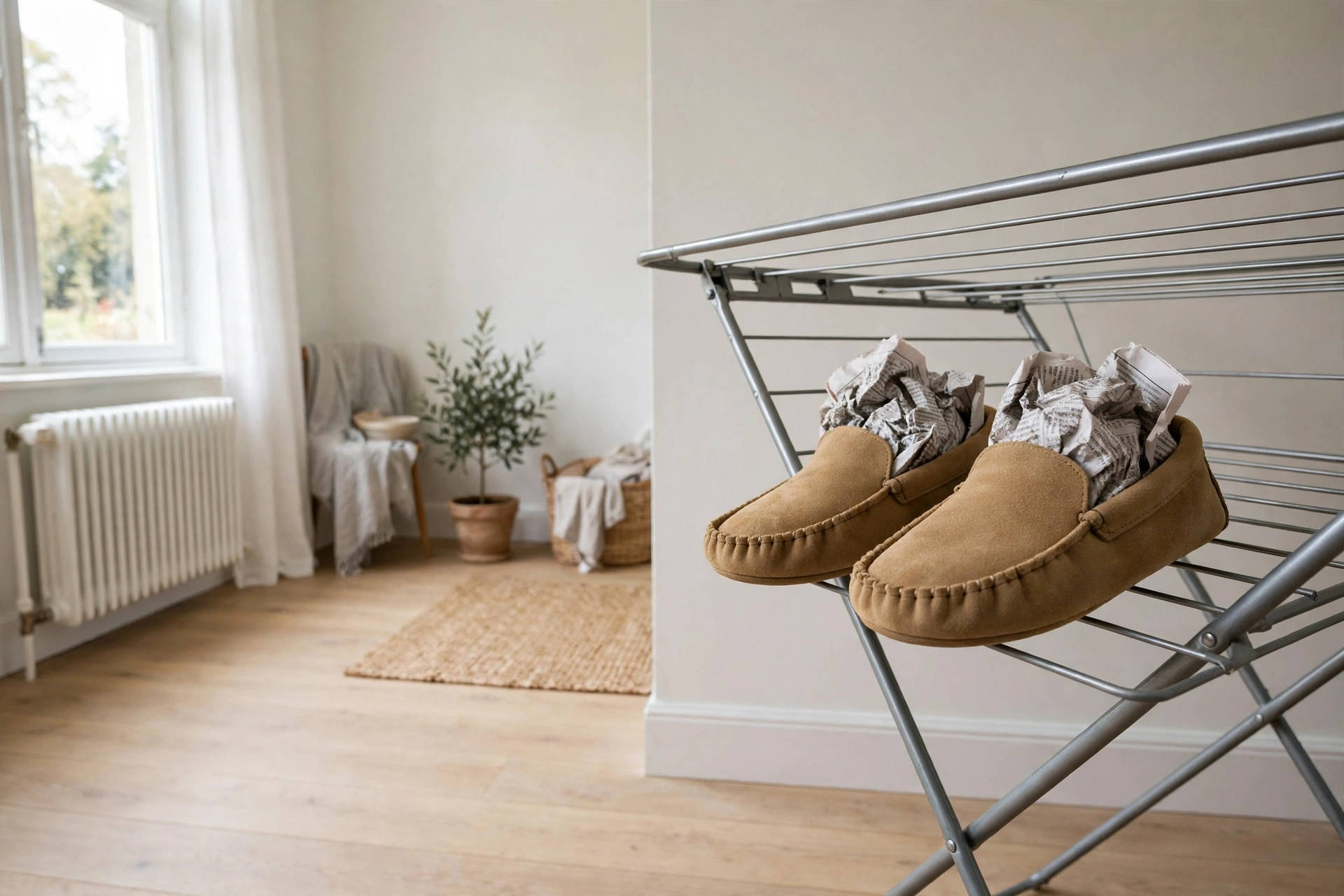
If your slippers are already soaked, do not reach for a hair dryer or radiator. Blot the excess water gently with a clean white cloth, stuff the slippers with newspaper to hold their shape, and let them air dry at room temperature away from direct heat and sunlight. Change the stuffing after a few hours if it feels damp. Drying takes a full day or longer.
Hand washing in the sink carries the same warning: suede should not be soaked, and hand washing is soaking by another name. Spot cleaning is the safe limit for suede uppers. You can freshen the lining separately with a damp cloth and baking soda, as described below, without wetting the suede outside. If a pair is badly stained over a large area, a professional leather cleaner is better than a home wash.
How Do You Clean the Lining and Remove Odor?
The lining collects sweat and odor even when the suede outside still looks clean. Sprinkle baking soda generously inside each slipper and leave it overnight, then shake and vacuum it out the next morning. Baking soda absorbs moisture and neutralizes odor without wetting anything.
For a deeper lining clean, dampen a white cloth with a little water and mild soap, wipe the inside, then wipe again with plain water to remove soap residue. Do not pour water into the slipper or soak the lining. Stuff the slippers and let them air dry fully before wearing them again. Newspaper stuffing helps the lining dry in shape and absorbs moisture.
Preventing odor is easier than removing it. Wear thin socks with your slippers so sweat is absorbed by the sock instead of the lining. Let the slippers air out between wears instead of pushing them into a closed closet. If your feet sweat a lot, keep two pairs in rotation so each gets a full day to dry.
How Do You Protect Suede Slippers After Cleaning?
Once the slippers are clean and fully dry, spray them lightly with a suede protector spray. Hold the can about six inches away, cover the whole surface evenly, and let them dry completely before you wear them. Protector spray does not make suede waterproof, but it slows how fast liquids soak in, giving you time to blot a spill before it becomes a stain. Reapply every few weeks in winter and after any deep clean.
Store them in a cool, dry place away from sunlight, stuffed with newspaper, never in a sealed plastic bag, which traps moisture and encourages mildew.
Finally, build a small routine and the slippers will last for years. Brush them once a week, erase scuffs when you notice them, treat stains the day they happen, and protect them monthly in winter. Five minutes of care a week beats an hour of rescue cleaning after months of neglect.
Frequently Asked Questions
Can I wash Mintonka suede slippers in the washing machine?
No, do not machine wash Mintonka suede slippers. Soaking suede can distort its shape, stiffen the leather, and fade the color. Brush, erase, and spot clean instead.
How do I remove water stains from suede slippers?
Blot the mark with a clean white cloth dampened with a little white vinegar, then let the area dry fully and brush the nap to restore the texture. Do not rub, because rubbing spreads the stain and damages the nap. Repeat once if needed.
What removes oil stains from suede slippers?
Cover the spot with cornstarch and leave it overnight so the powder absorbs the oil. Brush the cornstarch off the next day and repeat with fresh powder if a shadow remains. Do not use water on an oil stain first, because water can set the grease.
How do I get rid of smell inside suede slippers?
Sprinkle baking soda generously inside each slipper, leave it overnight, then shake and vacuum it out in the morning. Baking soda absorbs moisture and neutralizes odor without wetting anything. Thin socks and airing the slippers out between wears prevent the smell returning.
Should I spray new suede slippers with protector?
Yes, spray new suede slippers with a protector spray before you wear them, and reapply every few weeks in winter and after any deep clean. Hold the can about six inches away, cover the surface evenly, and let the slippers dry fully. Protector spray slows how fast liquids soak in, giving you time to blot spills.